
The 2026 NDIS reforms are the most significant shift in disability service regulation since the scheme launched. For providers who have always put people first — who have built their organisations on dignity, choice, and genuine partnership — this is your moment to lead.
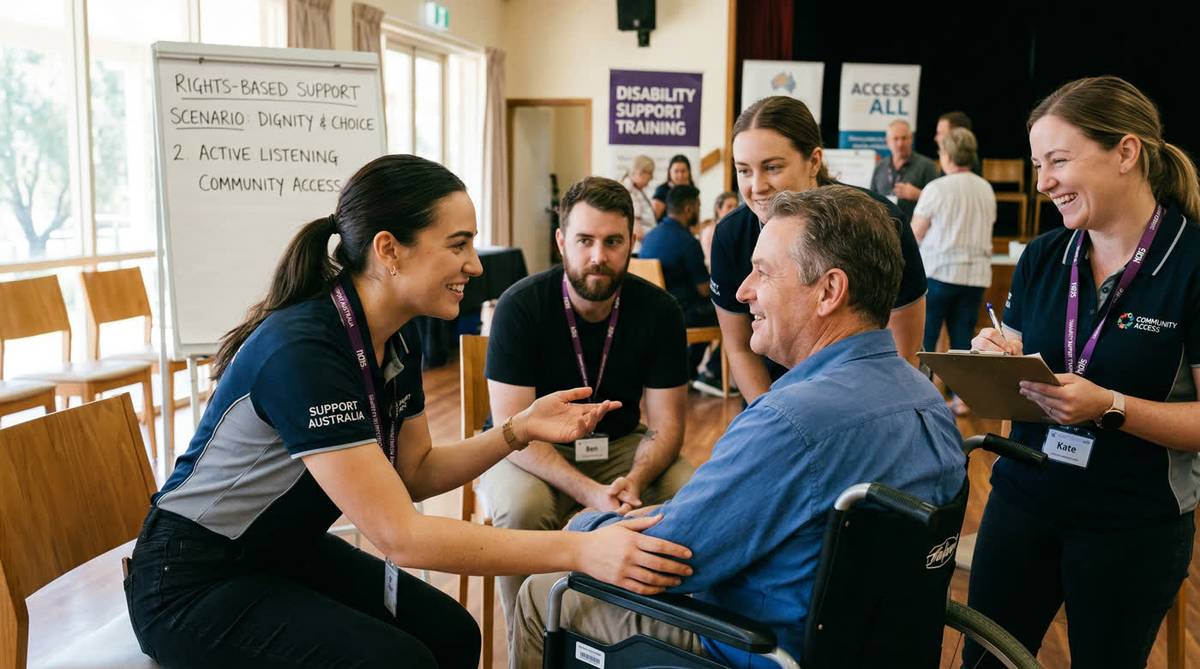
What's Actually Changing in 2026?
The 2026 reforms didn't arrive from nowhere. They are the sector's measured response to years of sustained advocacy — from the Disability Royal Commission, the NDIS Review, and most importantly, from the voices of people with disability themselves. These aren't policy tweaks on the edges. They are structural changes that will reshape how every registered provider operates.
Key fact: The NDIS Quality and Safeguards Commission's Corporate Plan 2025–26 explicitly states that human rights drive all regulatory activity — including protecting people with disability from violence, abuse, neglect, and exploitation. Human rights are no longer background context — they're the lens through which everything is assessed.
Preparation Window
SIL providers begin governance reviews, staff training, documentation audits, and co-design of participant feedback mechanisms. The Commission releases guidance on new Practice Standards.
Mandatory Registration Commences
All Supported Independent Living (SIL) providers and digital platform providers connecting participants with support workers must be registered with the NDIS Quality and Safeguards Commission. Worker screening, audit requirements, and reporting obligations apply from this date.
New SIL Practice Standards Active
New Practice Standards co-designed with people with disability (in partnership with Inclusion Australia) are introduced. Standards focus on quality in shared accommodation, dignity, privacy, and rights-based daily support.
I-CAN Planning Framework Transition
All participants transition to the new I-CAN standardised support needs assessment, replacing the previous model of gathering and submitting medical and allied health reports. The transition spans four years.
What the Four Changes Mean in Plain Language
SIL Mandatory Registration
SIL providers who operated unregistered will now need to meet the same quality standards, audit requirements, and worker screening checks as all other registered providers. No more unregulated supported accommodation.
New SIL Practice Standards
Developed in partnership with Inclusion Australia and co-designed with people with disability. These standards put human rights, dignity, and genuine choice at the centre of quality assessment — not just procedural compliance.
I-CAN Planning Framework
A new national planning system replaces the current approach of submitting medical reports. Standardised support needs assessment aims to be more equitable and less reliant on diagnosis-framing.
Platform Provider Registration
Digital platforms that connect participants with independent support workers must now register, bringing them into the regulated ecosystem for the first time. Safety and quality standards apply equally.
"Registration means the NDIS Commission has greater oversight and visibility of providers, allowing us to reduce risks for participants, identify and respond to wrongdoing and fraud, and reduce risks to the NDIS scheme."
NDIS Quality and Safeguards CommissionWhy Human Rights Can't Be an Afterthought
Here's the honest truth: for too long, "compliance" and "human rights" have been treated as separate conversations in the disability sector. Organisations focus on ticking boxes — policies in place, audits passed, checklists complete — and assume that's the same as upholding the rights of the people they serve.
It isn't.
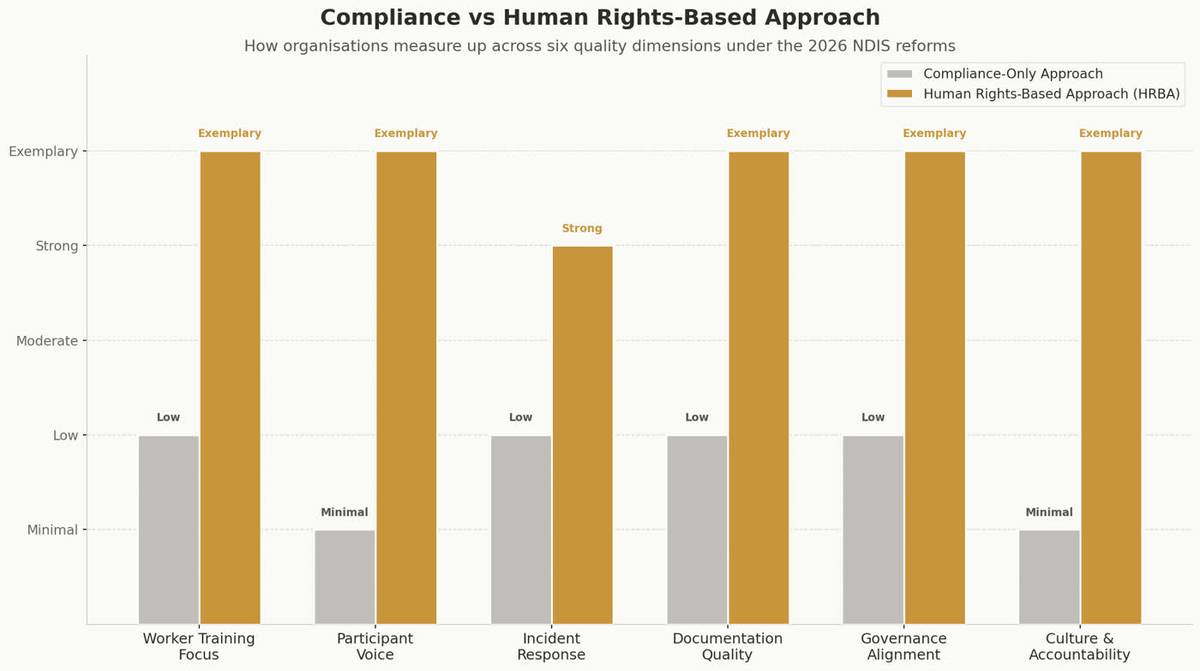
What the Disability Royal Commission found: Violence, abuse, neglect, and exploitation didn't only happen at organisations that had failed their compliance audits. They happened — and in some cases still happen — at organisations that were technically compliant but had never built a culture where human rights were genuinely lived. Compliance is necessary. It is not sufficient.
❌ Compliance-Only Culture
- Policies exist on paper; staff rarely reference them
- Incidents are recorded but root causes aren't explored
- Participant feedback is gathered once a year as a formality
- Support plans are standardised templates applied to every person
- Workers ask "did we follow procedure?" after something goes wrong
- Rights are mentioned in induction; never revisited
✅ Human Rights-Based Culture
- Human rights language is embedded in everyday team conversations
- Incidents trigger the question: "whose rights were affected, and how?"
- Participant voice shapes service design in real time
- Support plans reflect each person's unique voice, goals, and preferences
- Workers feel safe raising concerns and are supported to act on them
- Rights are revisited in supervision, team meetings, and reviews
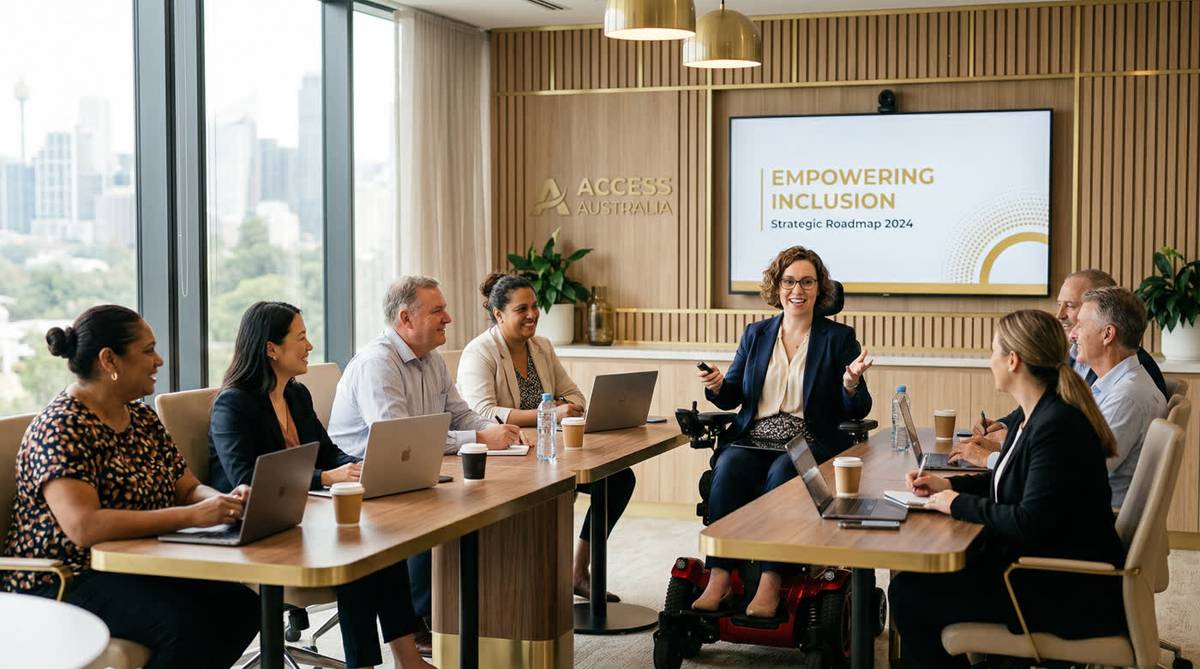
What a Human Rights-Based Approach Actually Looks Like
A Human Rights-Based Approach (HRBA) isn't a policy document or a compliance module. It is a way of thinking — about people, about power, and about what genuine support means. At its foundation, it draws on the United Nations Convention on the Rights of Persons with Disabilities (UNCRPD) — the internationally recognised framework that recognises people with disability as full rights-holders, not passive recipients of services.
Australia ratified the UNCRPD in 2008. Its core principle — "Nothing About Us Without Us" — is now embedded in the new SIL Practice Standards co-design process, meaning people with disability have a direct voice in writing the rules that govern the supports they receive.
The B-HART framework brings together four foundations that work in alignment — not as separate programs, but as an integrated way of creating services where every person, every day, is treated as a full human being with rights:
UNCRPD
The international rights framework that establishes what people with disability are entitled to — the foundation on which everything else is built.
Inner Development Goals
The internal work that leaders and workers need to do to show up with genuine empathy, curiosity, and integrity — because rights-based practice starts from the inside.
Rights-Based Positive Behaviour Support
Support that is respectful, dignified, and centred on choice — not on managing behaviour as a problem, but on understanding the whole person.
Trauma-Informed Care
Recognising and responding to lived experience of trauma with safety, sensitivity, and awareness — so that support never inadvertently re-harms.
Your 5-Step Action Plan: Making the Shift Before July 2026
Whether you are a SIL provider preparing to register, a support coordinator navigating the new planning framework, or a service provider wanting to get ahead of the Practice Standards review — here is what matters right now.
Embed Human Rights at the Governance Level
The new regulatory environment will scrutinise your governance — not just your paperwork. Your board, executive team, and leadership group need to be able to articulate what human rights means for your organisation. Does your Board include lived experience representation? Does your organisational strategy reference the UNCRPD? When something goes wrong, does your incident process ask "what rights were affected?" alongside "what procedures were breached?"
Build a Culture Where Workers Can Act on Rights
This is where most organisations have the biggest gap. A worker can't uphold someone's rights if they've never been given the language, the permission, or the practical skills to do it. Training matters — but training alone isn't enough. Workers need an environment where raising concerns is encouraged, where dignity in support is the default, and where "that's just how we do it here" is never an acceptable answer.
Make Participant Voice Real, Not Symbolic
The principle "Nothing About Us Without Us" is more than a motto — it is becoming a practice standard. People with disability need to be genuinely involved in shaping what happens in their lives: through regular, accessible feedback mechanisms; support plans that reflect what the person actually wants; complaint processes they can actually use; and genuine co-design of service improvements, not consultation as a formality.
Audit Your Documentation for Rights Evidence
When auditors arrive under the new standards, they will be looking for evidence that your organisation actually delivers on human rights — not just that you have a rights policy on the wall. Your support plans, incident records, and review notes should tell a story about each person's choices, goals, and lived experience of support. If your documentation could apply to any participant, it isn't doing its job.
Pursue B-HART Certification Before Registration Is Required
B-HART Certification is the opportunity to embed a Human Rights-Based Approach into your organisation before the regulatory environment demands it. Providers who complete this process won't be scrambling in 2026 — they'll be the benchmark others are assessed against. It isn't just about differentiation in a crowded market (though it is that too). It's about building the kind of organisation that people with disability can genuinely trust.
Getting started: You don't have to overhaul everything at once. Begin with a single honest conversation at your next leadership meeting: "If a person with disability we support could see everything we do this week — every decision, every interaction, every note we write — would they say their rights were at the centre of it?" That question is the beginning of the shift.
Don't wait for the guidance to arrive: The Commission will release detailed implementation guidance in the lead-up to July 2026 — but organisations that wait for that guidance to begin their cultural work will be starting too late. Governance and culture change takes time. Start now.
What Rights-Based Practice Looks Like Day to Day
Rights-based practice isn't reserved for policy documents or annual reviews. It shows up — or doesn't — in the small moments of every single shift.
- Workers kneel or sit at eye level rather than standing over the person they support
- Support plans use the person's own words to describe what a good day looks like
- Choices are offered genuinely — not steered toward what's convenient for the roster
- Workers ask "what do you want?" before "what do you need?"
- Complaints are welcomed and followed up — even when they're uncomfortable
- Privacy is actively protected in shared living settings
- Risk is discussed with the person, not managed around them
- Cultural identity, language, and community connection are part of every support plan
What Compliance-Only Practice Often Looks Like Instead
- Support plans are filled with clinical language the person wouldn't use or recognise
- Feedback forms are distributed once a year — and the responses rarely change anything
- Incident reports ask "what procedure was followed?" but not "what rights were affected?"
- Restrictive practices are documented but never questioned or reduced
- Workers follow house rules that the person living there had no say in creating
- Risk aversion overrides the person's right to make their own decisions
- Cultural and spiritual needs are listed in paperwork but unsupported in practice
"Every person deserves dignity in the services they receive. Not some people. Not most of the time. Every person, every time."
B-HART — Supporting with HeartKey Takeaways
- Mandatory registration for SIL and platform providers begins 1 July 2026 — start your governance and documentation review now, not when the final guidance arrives
- New SIL Practice Standards are being co-designed with people with disability and will have a strong human rights focus — the regulatory bar is being rewritten, not just raised
- The Disability Royal Commission found that compliance-only cultures failed people even when audits were passed — culture change must accompany structural change
- Worker capability, genuine participant voice, and co-design are all part of the new quality story — not just management systems and policy documents
- B-HART Certification helps organisations build a human rights culture before the regulatory bar rises — not in reaction to it, but ahead of it
Frequently Asked Questions
Does mandatory registration apply to all NDIS providers from July 2026?
No. The 1 July 2026 mandatory registration requirement applies specifically to Supported Independent Living (SIL) providers and digital platform providers that connect participants with independent support workers. Other unregistered providers are not affected by this specific change — though the Commission has signalled a broader intent to bring more of the sector into the regulated ecosystem over time.
What are the new SIL Practice Standards and when will they be finalised?
The new Practice Standards specifically for SIL providers are being co-designed with people with disability, in partnership with Inclusion Australia. They will focus on quality in shared accommodation, dignity, privacy, and human rights in daily support. The Commission has not yet published a final release date for the standards, but they are expected to align with the July 2026 registration commencement.
What is the I-CAN framework and how does it affect existing participants?
I-CAN (Individual Capacity Assessment for NDIS) is the new standardised support needs assessment tool that will replace the current practice of gathering and submitting medical and allied health reports for NDIS planning. All existing participants will transition to the new model over a four-year period (2026–2030). The intent is to create a more consistent, equitable assessment process.
How is B-HART Certification different from NDIS registration?
NDIS registration is a regulatory requirement — it's the floor, not the ceiling. B-HART Certification is a voluntary, values-led process that embeds a Human Rights-Based Approach into your organisation's culture, governance, and practice. It is not a compliance exercise; it is a transformation process. Organisations that complete B-HART Certification are not just meeting the regulatory standard — they are demonstrating to participants, families, and auditors that their commitment to human rights is genuine and embedded.
We already have a Human Rights policy. Is that enough?
A policy is a starting point, not a destination. The Disability Royal Commission was clear that many organisations where abuse and neglect occurred had policies in place — the failure was cultural, not procedural. The question is not "do we have a policy?" but "can every worker in our organisation explain what human rights means in their specific role, and do they feel supported to act on it?" If the answer is uncertain, there is work to do.
Ready to Go Beyond Compliance?
B-HART Certification is designed for providers who want to lead — not follow. Our certification process, training programs, and co-design tools help organisations embed a genuine Human Rights-Based Approach before the regulatory environment demands it. Because the people you support deserve more than a provider that's compliant. They deserve a provider that believes in their rights.
Get B-HART CertifiedOr get in touch to learn more about how B-HART can support your organisation's human rights journey.
- NDIS Quality and Safeguards Commission — Mandatory Registration Reform Hub
- NDIS Commission Corporate Plan 2025–26
- United Nations Convention on the Rights of Persons with Disabilities (UNCRPD)
- Inclusion Australia — Co-design partner for new SIL Practice Standards
- Royal Commission into Violence, Abuse, Neglect and Exploitation of People with Disability — Final Report