Turning Commitment to Action
On 10 December 2025, people from across the disability sector, government, advocacy, community, and lived experience leadership gathered for B-HART’s Human Rights Day Symposium. It was a day that did more than mark International Human Rights Day. It challenged us to look closely at where rights are still being restricted, where power remains uneven, and what leadership looks like when human rights are taken seriously.
Across the day, one message came through clearly: human rights are not abstract principles or future aspirations. They are lived, or denied, through everyday decisions, systems, and relationships.
As Minister Nat Cook reminded us, “Human rights are never guaranteed. They demand vigilance, courage, and collective responsibility.” Laws matter, but they are not enough on their own. Real change requires culture, accountability, and people working together with lived experience to turn rights into reality.
The symposium moved deliberately between practice, policy, and leadership. From behaviour support and housing, to education, employment, mental health, the arts, and regulation, speakers and panellists named the gap between rights on paper and rights in practice, and importantly, what can be done now to close it.
Dr Alinka Fisher grounded the day in the reality of everyday practice, reminding us that “Human rights are not aspirational values, they are a roadmap for our practice and a minimum expectation.” This framing set the tone for conversations that were honest, practical, and deeply connected to people’s lived experiences.
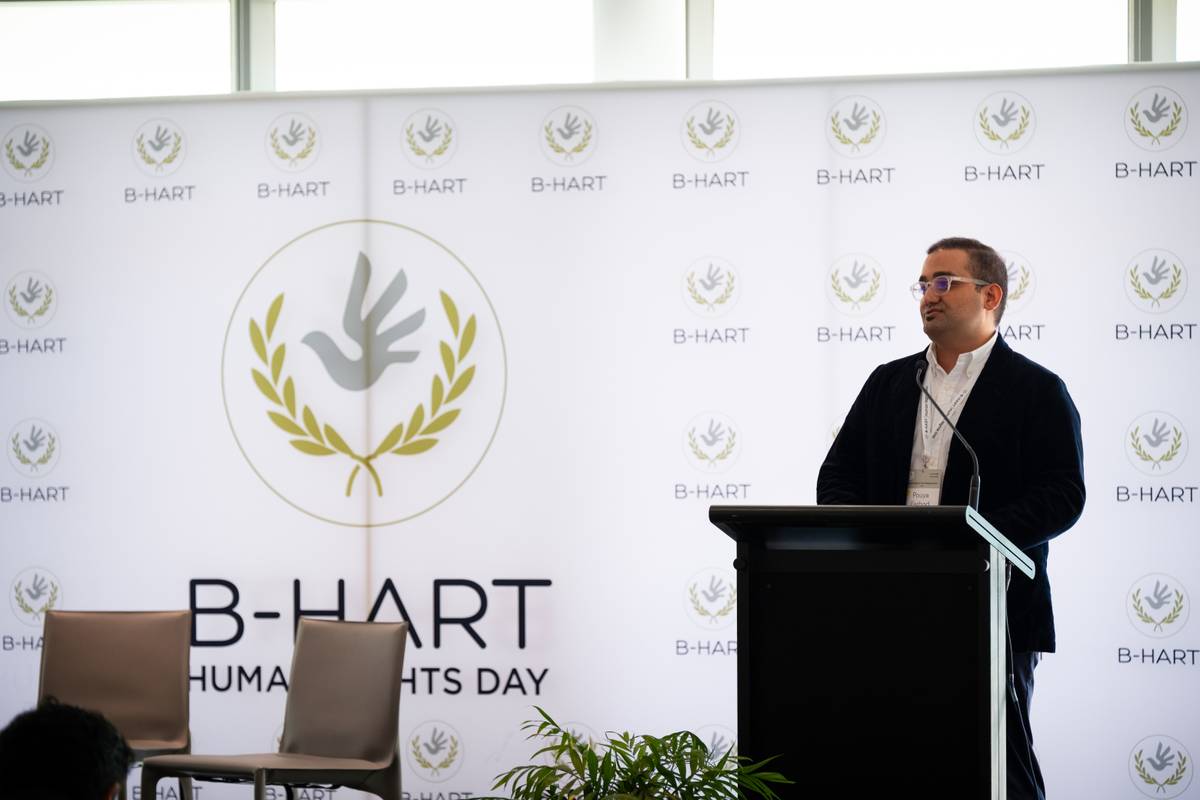
Throughout the panels, the importance of autonomy and supported decision making was repeatedly reinforced. Speaking to the draft Mental Health and Wellbeing Bill, currently under consultation, Dr John Brayley highlighted the significance of legislative language that recognises autonomy in practice: “A decision of a person with a mental illness made using supported decision making will be taken to be a decision of the person.” It was a powerful reminder that respecting rights requires changing how decisions are made, not just who holds authority.
The afternoon panel on Human Rights Leadership at Every Level asked perhaps the hardest questions of the day. Beginning with the confronting reality that forced sterilisation of women and girls with disability is still occurring, panellists challenged us to consider what this says about leadership, accountability, and courage within our systems. As Sarah McInnes noted, “When women and girls with disability are sterilised without free and informed consent, it tells us the system is failing.”
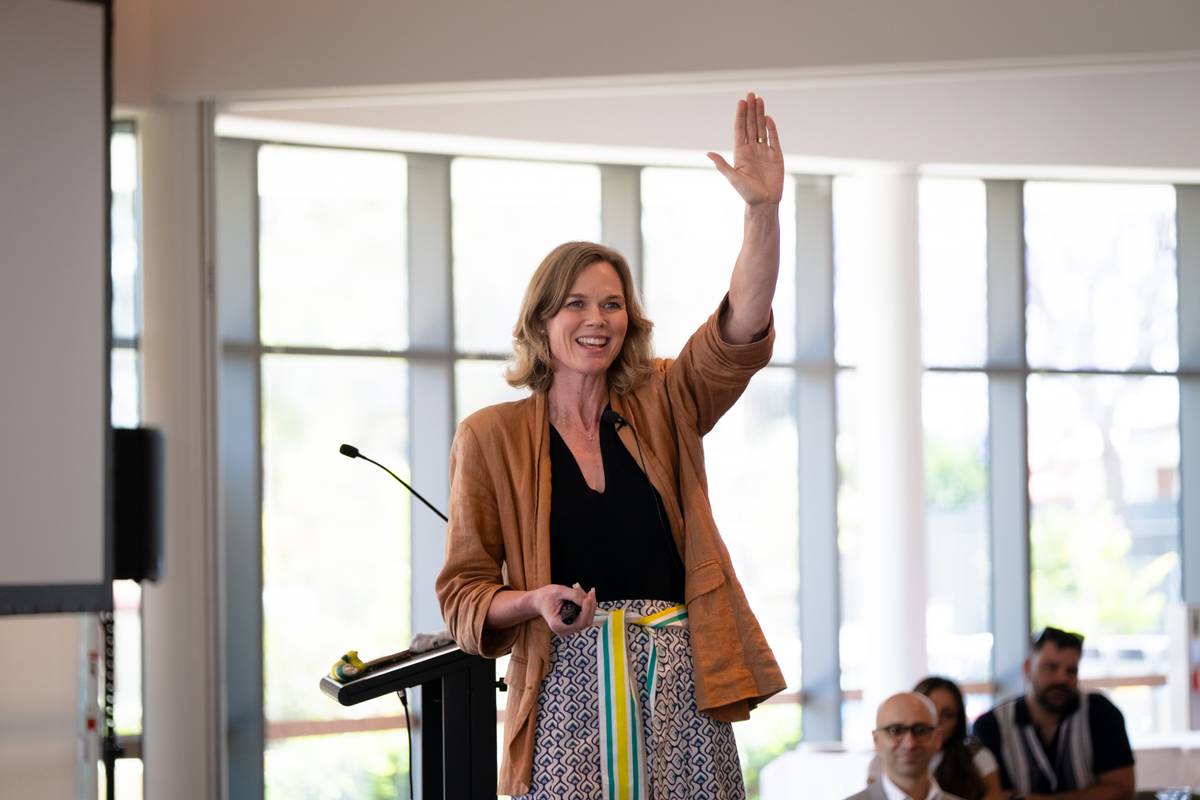
Leadership, as the day made clear, is not limited to formal roles. Katrina Webb OAM spoke about inclusive leadership as a mindset, not a position, reminding us that “Inclusive leadership is not just about accessibility, it’s about developing an inclusive mindset that you take everywhere you go.” Leadership shows up in how we listen, whose voices we centre, and whether we are willing to ask the person rather than assume we know.
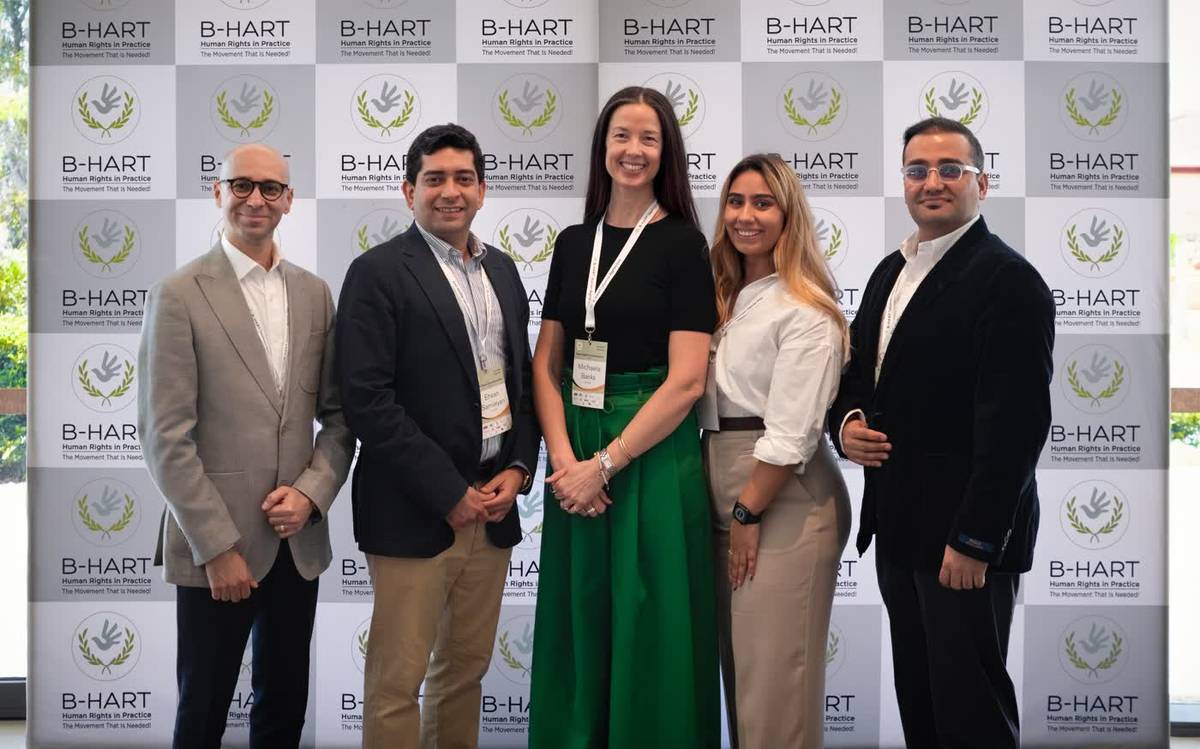
A resonant call to action came from Michaela Banks, Executive Manager at B-HART, who invited everyone to leave with responsibility, not inspiration alone: “I would love it if every single person walked out committed to one action… because we can be the 20%, and the 20% can shift a system.”
Building on this call, Pouya Farbod, Founder and CEO of B-HART, spoke about the importance of timing and follow-through. He shared that B-HART has already begun establishing an action committee to oversee the commitments emerging from the symposium. This committee will be responsible for tracking actions, supporting implementation, and reporting back on progress at next year’s Human Rights Day Symposium.
That sense of shared responsibility stayed with many of us. The symposium was not about celebrating progress without critique. It was about naming harm, recognising momentum, and committing to practical action, from where each of us stands.
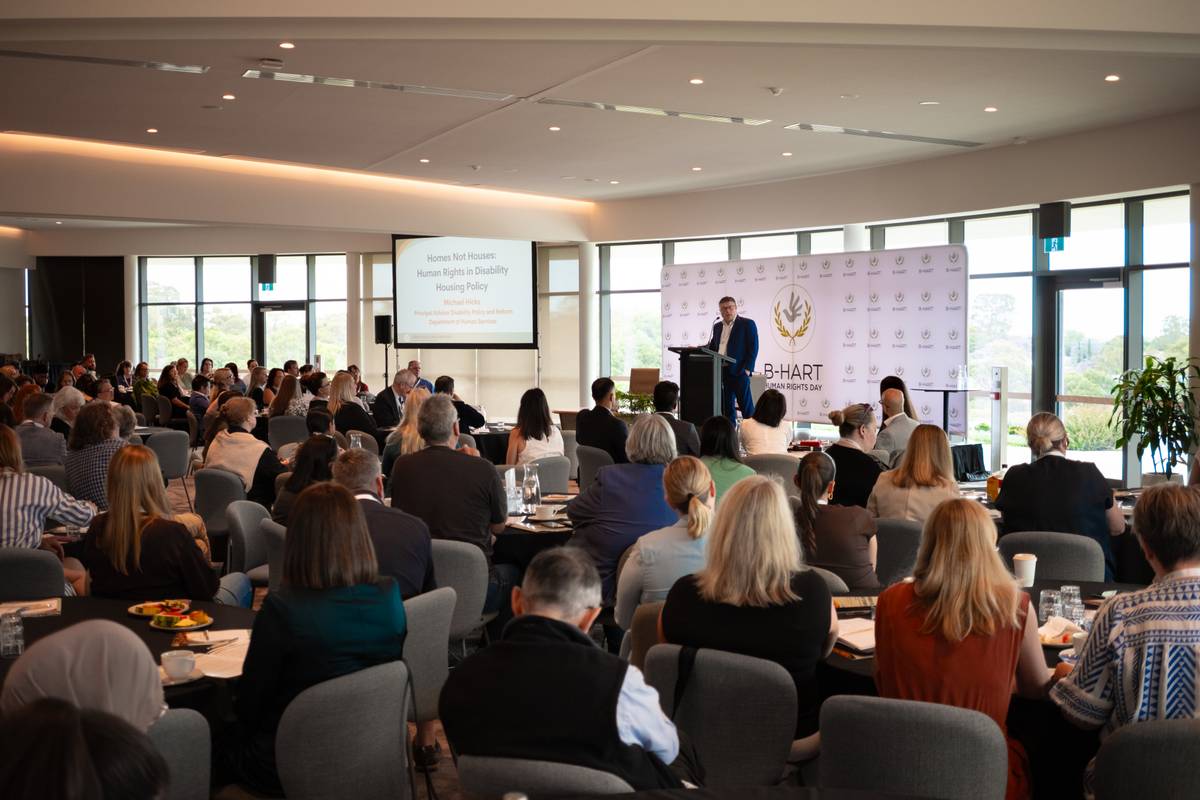
This was B-HART’s first Human Rights Day Symposium, and it will not be the last. We are committed to making this an annual space for honest reflection, accountability, and collective action. Over the coming months, we will continue to share videos, reflections, and practical tools from the day, and to build on the conversations that began in that room.
Human rights work is not finished in a single event, but moments like this matter. They help align language, values, and action. They remind us that dignity is not negotiable, and that leadership, at every level, has a role to play.
We invite you to revisit the gallery, watch the upcoming videos, and most importantly, consider your own next action. Because rights are not upheld by intention alone, they are upheld by what we choose to do next.