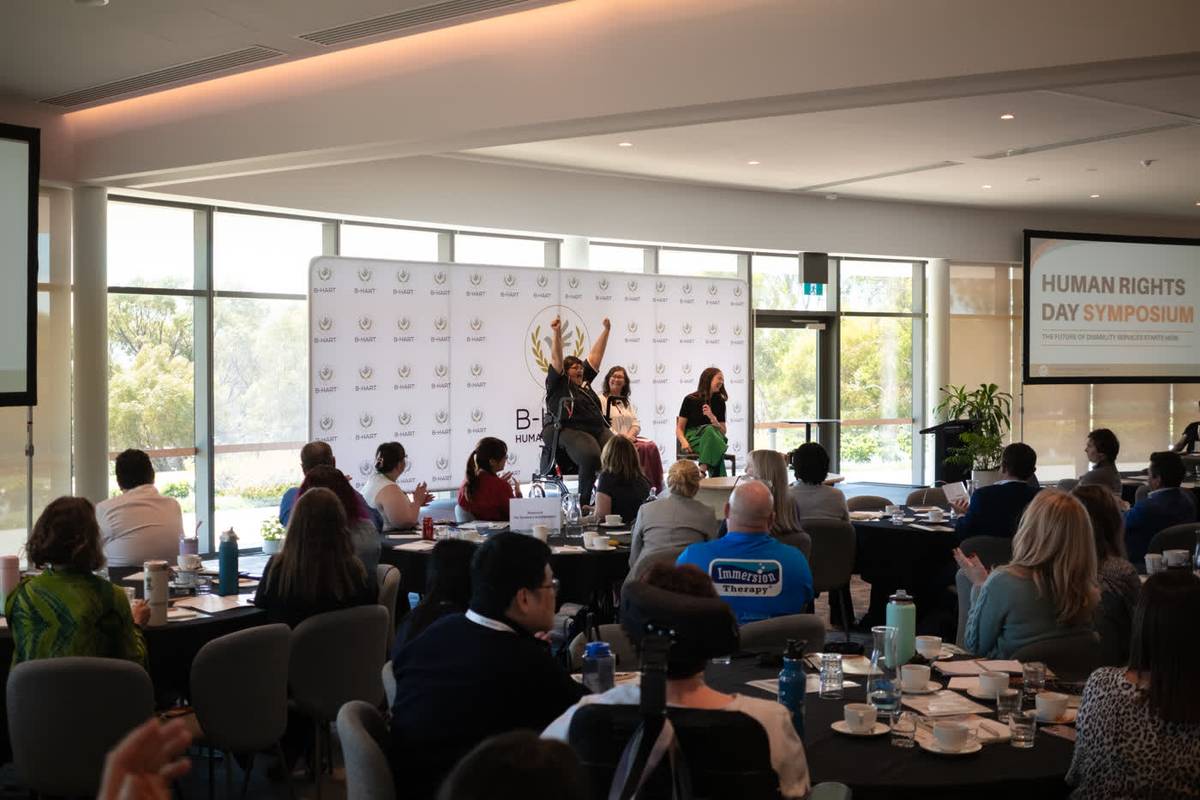
On 10 December 2025, B-HART brought together people from across the disability sector, government, advocacy, and lived experience leadership to mark International Human Rights Day. The symposium was not about celebrating human rights in theory, but about examining how they are upheld, or denied, in everyday decisions, systems, and leadership.
Across the day, a clear message emerged: human rights are not aspirational values or policy statements. They are lived through practice, culture, and accountability. As Minister Nat Cook reminded us, “Human rights are never guaranteed. They demand vigilance, courage, and collective responsibility.”
Speakers and panellists explored this gap between rights on paper and rights in practice across behaviour support, housing, education, employment, mental health, the arts, and regulation. The conversations were practical, grounded, and honest, focused not only on what is broken, but on what can change now.
One of the most tangible examples of this shift came in the discussion on supported decision making. Reflecting on the proposed Mental Health and Wellbeing Bill, currently under consultation, Dr John Brayley noted: “A decision of a person with a mental illness made using supported decision making will be taken to be a decision of the person.” This kind of clear legislative language matters, because it reshapes how autonomy, dignity, and authority are understood in practice.
The afternoon panel on Human Rights Leadership at Every Level challenged participants to look more closely at the role of leadership in driving change. Beginning with the continued practice of forced sterilisation of women and girls with disability, panellists were clear that leadership failures are often systemic, not individual. As Sarah McInnes stated, “When women and girls with disability are sterilised without free and informed consent, it tells us the system is failing.”
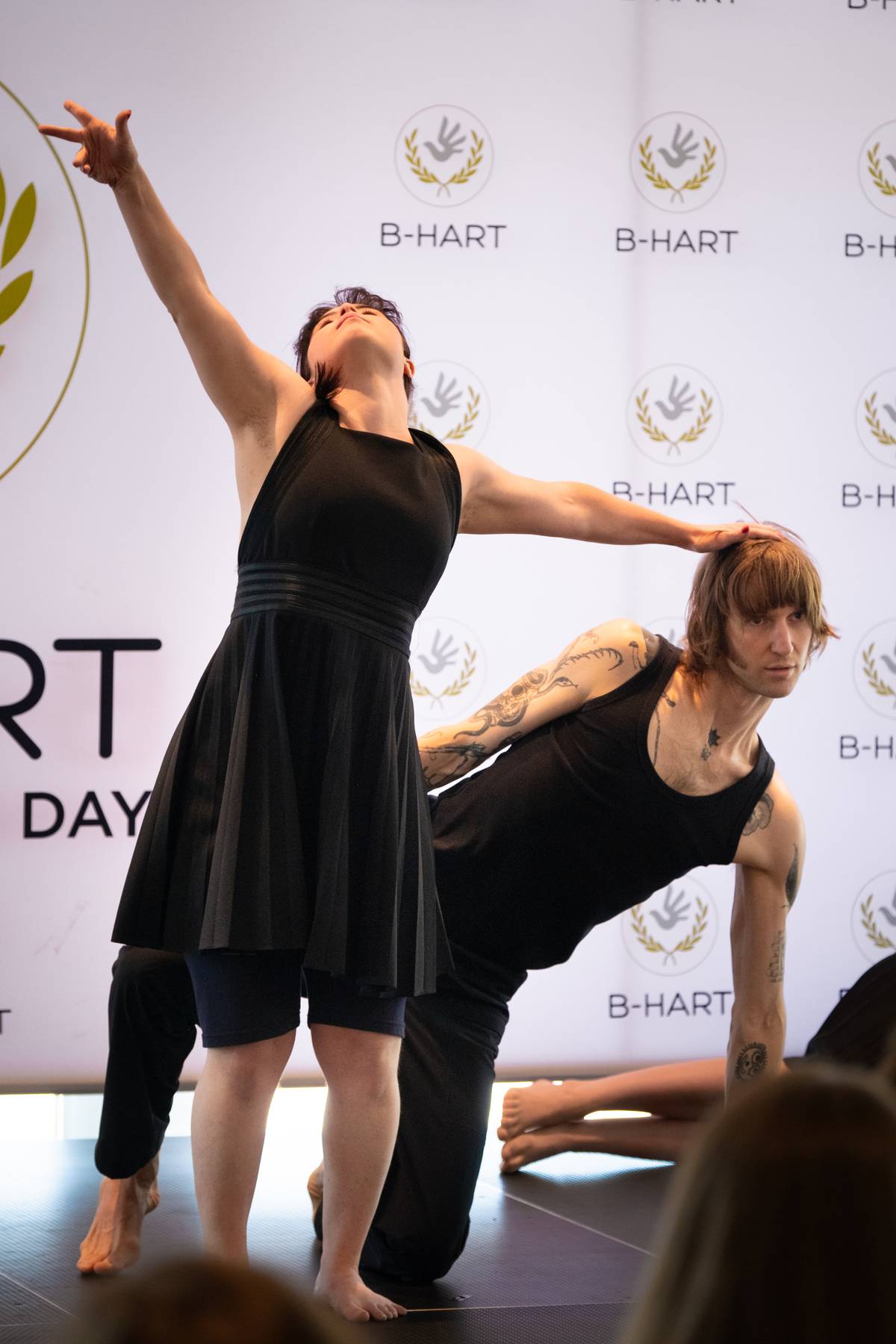
Throughout the day, leadership was framed not as a position, but as a responsibility carried into everyday decisions. Katrina Webb OAM captured this simply: “Inclusive leadership is a mindset you take everywhere.”
As the symposium drew to a close, Michaela Banks invited everyone in the room to move beyond reflection and into responsibility: “I would love it if every single person walked out committed to one action… because we can be the 20% that shifts a system.”
Building on this call, Pouya Farbod emphasised that intention must be matched with timing, structure, and follow-through. He shared that B-HART has already begun establishing an action committee to oversee the commitments emerging from the day, ensuring actions are implemented and that progress is reported back at next year’s symposium.
This was B-HART’s first Human Rights Day Symposium, and it will now become an annual event. Each year, we will return not only to reflect, but to account for what has changed, what has not, and what must come next.
Human rights are upheld not by intention alone, but by timely, collective action, and by our willingness to return and report on the progress we make together.