
The NDIS reforms are pushing the sector to move faster on quality, safety, and integrity — and the biggest risk for providers isn’t “not knowing what’s changing”. It’s treating reform as paperwork instead of changing the day-to-day systems that keep people with disability safe and respected.
This guide is written for disability service leaders and quality teams who want to implement NDIS reforms in 2026 in a way that protects human rights and makes services safer in practice (not just “compliant on paper”).
What “NDIS reforms implementation” really means in 2026
In many organisations, reform work starts with reading a list of changes, updating policies, and scheduling an audit. That’s necessary — but it’s not implementation.
Implementation means your governance, incident response, workforce capability, and quality systems actually change how decisions are made at 7am on a Monday, when something goes wrong, or when a person wants to raise a concern.
In other words: if your systems don’t make it easier for people with disability to be safe, heard, and in control, the reform work is unfinished.
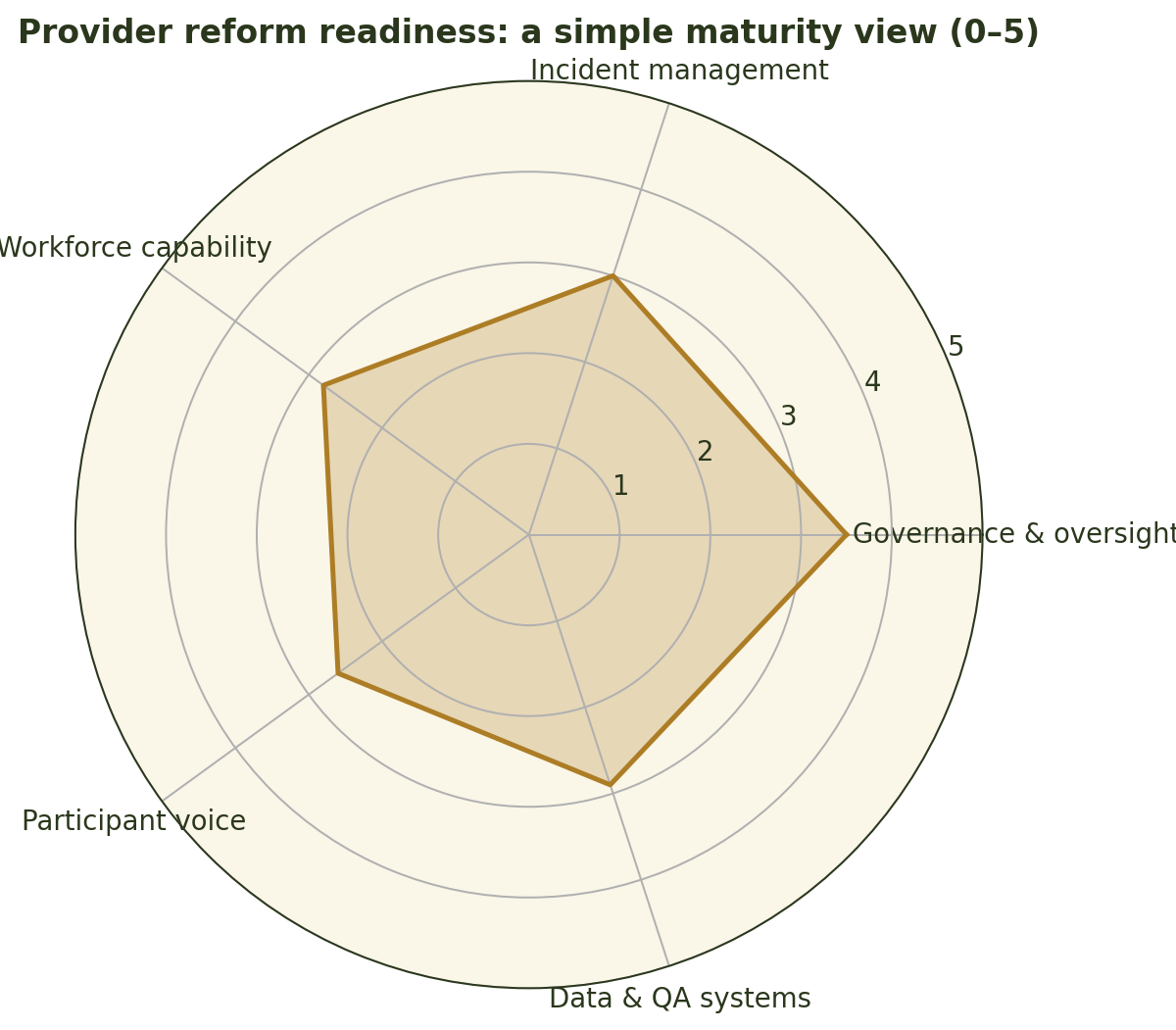
Start with governance: what leaders need to be able to see (weekly)
Good governance isn’t a quarterly board report that nobody reads. It’s a rhythm: what leaders review, how they ask questions, and what gets acted on.
What strong governance looks like
- Leaders see incident trends, not just individual events
- Participant feedback is discussed alongside compliance metrics
- Actions have owners and dates (not “we’ll look into it”)
- Workforce capability is tracked and improved over time
What weak governance looks like
- Incidents are “handled” but learning never changes practice
- Quality is measured by audit success only
- Leadership hears about problems late
- People with disability have little influence over decisions
If you want a quick starting point, set a 30-minute weekly “participant safety and learning” meeting where leaders review incident trends, complaints themes, and actions. Keep it consistent. Implementation needs a cadence.
Incident management: build the system that protects people (not the system that protects reputation)
Every provider should have an incident management system, and registered providers must have one as part of registration conditions, according to the NDIS Quality and Safeguards Commission’s incident management guidance (NDIS Commission incident management).
The most important test is simple: when an incident happens, does the person feel safe, respected, and informed — and does the organisation learn enough to reduce the risk of it happening again?
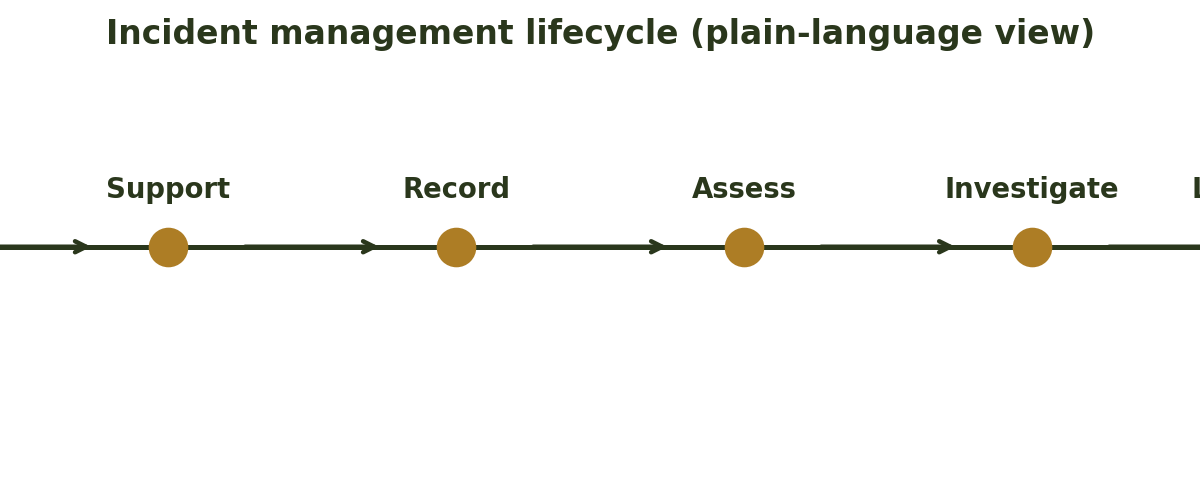
Practical improvements providers can make this month
Make reporting easy (and safe)
Use plain language forms, clear definitions, and a culture where workers and participants can report concerns without fear of blame.
Document the “support the person” actions
In your system, the first fields should be: what immediate support was offered, what the person wanted, and how they were kept informed.
Track themes, not just events
Theme coding (even simple tags) helps you detect patterns: time-of-day risks, staffing gaps, restrictive practices, medication issues, communication failures.
Close the loop with the person
Let the person know what changed because of the incident. It’s one of the strongest ways to rebuild trust.
If incident management becomes “prove we complied”, providers lose the opportunity to improve safety. A rights-based approach keeps the focus on dignity, choice, and preventing repeat harm.
Quality systems: what to update so change actually sticks
When reforms land, providers often update policy documents first. A better sequence is: fix the system that drives behaviour, then update documentation to match reality.
| System | What to check | What “better” looks like |
|---|---|---|
| Risk management | Do risk registers reflect real service delivery risks? | Risks link to controls, audits, and learning from incidents |
| Internal audit | Are you auditing “files” or “practice”? | Audits include observation, conversations, and participant voice |
| Training | Is training tracked as attendance or capability? | Supervision and competency checks reinforce skills on the job |
| Complaints | Do complaints lead to system change? | Complaints themes are reviewed monthly, with actions assigned |
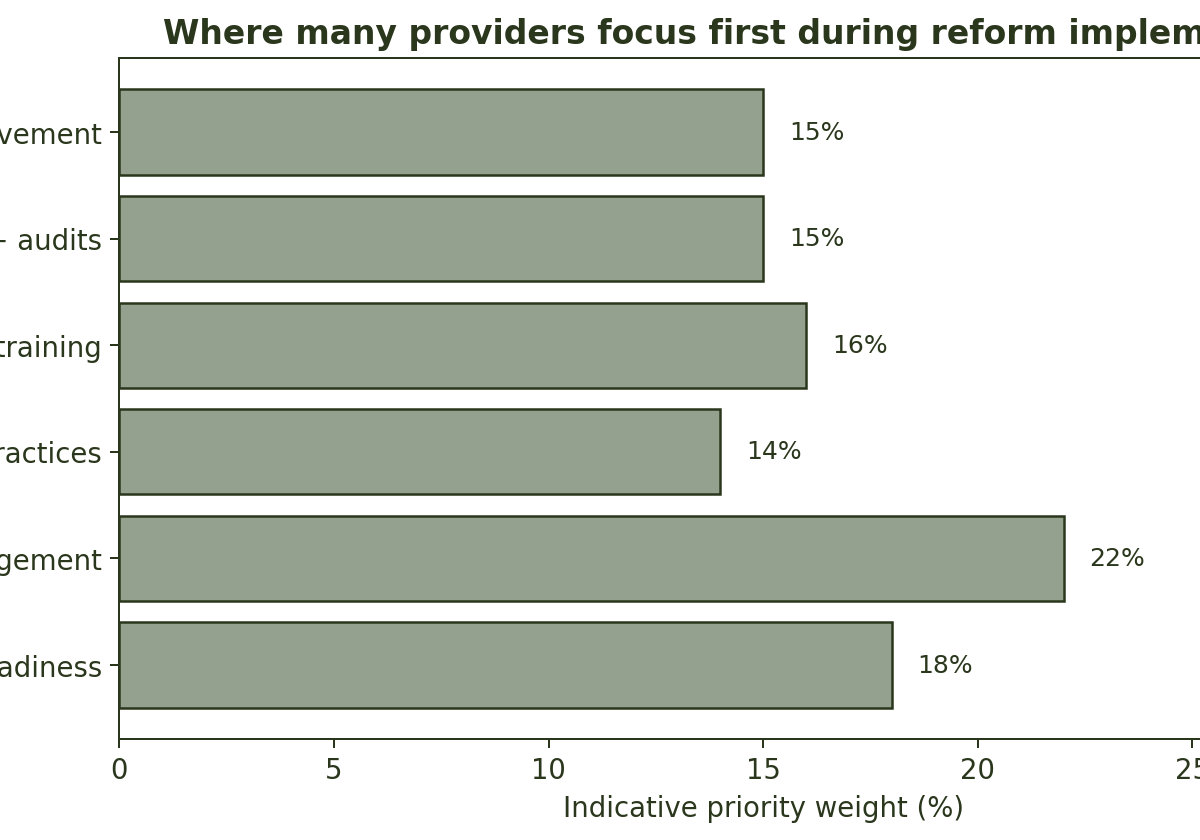
Where many providers focus first in 2026 (and why)
Implementation usually needs sequencing. The point isn’t that every provider should do the same thing — it’s that your plan should be explicit about priority, owners, and timelines.
Federal Parliament has passed reforms to strengthen NDIS integrity and safeguards, including tougher penalties for serious misconduct and stronger powers for the NDIS Commission (NDIS Commission media release).
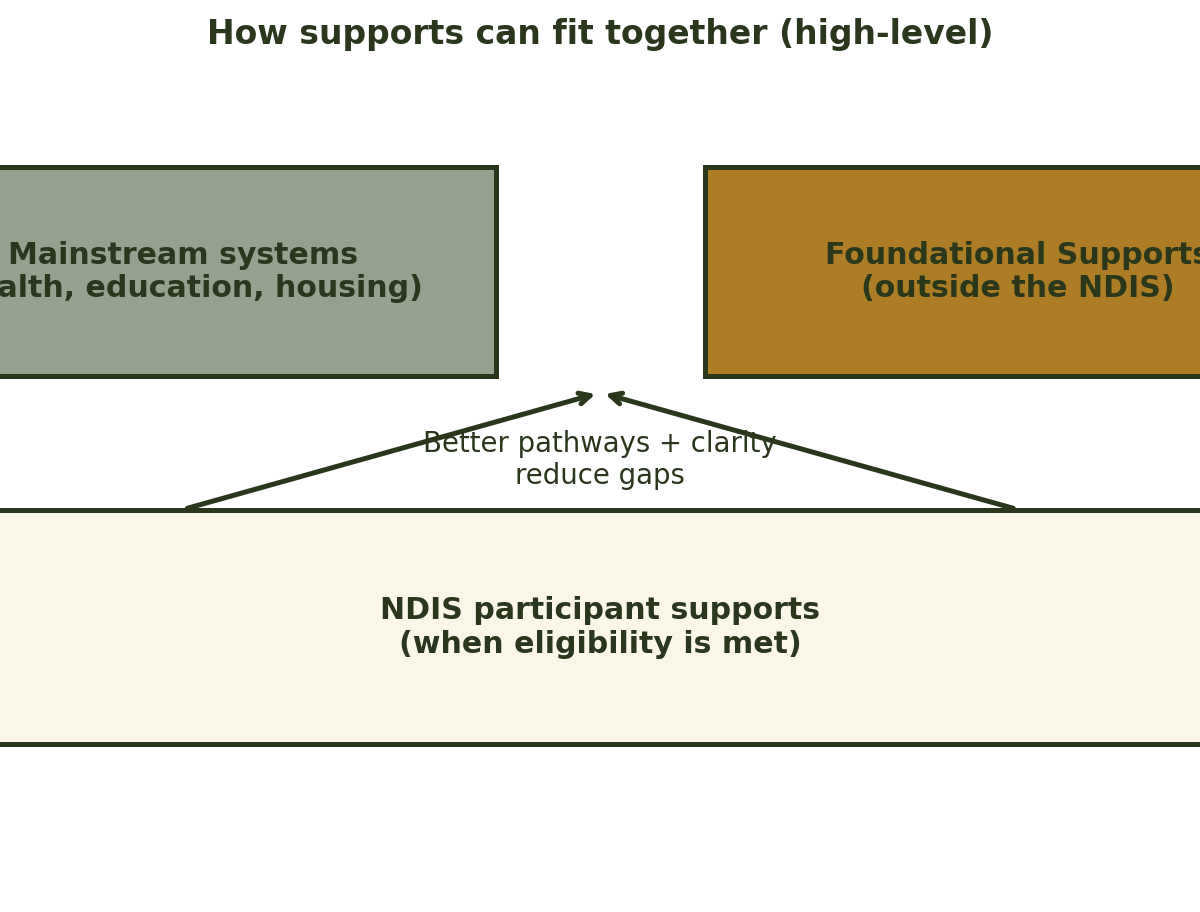
Foundational Supports: what providers should understand now
As the broader disability ecosystem evolves, many people will access supports outside the NDIS as well as through mainstream services. The Australian Government describes Foundational Supports as supports outside the NDIS, in addition to mainstream systems such as education and health (DSS Foundational Supports).
Providers can prepare by strengthening referral pathways, offering clear information, and designing services that work well alongside mainstream and community supports.
Quality isn’t proven by policies. It’s proven by what happens when support is hard, messy, and urgent — and the person still feels safe and in control.
— B-HART TeamHow to turn reform into day-to-day practice (a 6-week sprint)
Many providers try to “roll out” reforms with a single policy update and an all-staff email. The result is predictable: workers keep doing what they’ve always done, and leaders feel frustrated that change doesn’t stick.
A better approach is a short sprint that includes co-design, small tests, and clear measures. It gives you momentum without overwhelming people.
Pick one high-risk workflow
Choose a workflow that affects safety and dignity: incident response, restrictive practice escalation, medication support, or mealtime support.
Map “what actually happens”
Run a short workshop with workers and at least one person with disability (or an advocate) to map the real workflow. Include where people feel unsafe, unheard, or rushed.
Test two small changes
Examples: a clearer response plan template, a new “support the person first” checklist, or a new escalation contact tree for after-hours decisions.
Train + coach in the real environment
Short training plus on-shift coaching is more effective than long eLearning modules. Make sure supervisors know what “good looks like”.
Measure and lock it into systems
Update the form, the checklist, the supervision prompt, and the governance dashboard so the new practice becomes the default.
Governance questions that keep reform anchored to human rights
Leaders don’t need to be experts in every operational detail. They do need the right questions — asked consistently — so the organisation keeps returning to safety, dignity, and choice.
Whose voice shaped this decision?
Did people with disability influence the design, or were they only asked to “review” a near-final plan?
What would make this safer next time?
Not “who is at fault”, but what system change reduces repeat harm — staffing, environment, training, communication, or escalation pathways?
Are we improving, or just documenting?
Look for leading indicators: near-misses, concerns raised early, people feeling confident to complain, and supervision quality.
How do we know people feel respected?
Include participant experience measures and stories alongside quantitative metrics.
If your governance pack is only numbers, add a 1-page “participant experience pulse” each month: three themes from feedback, two examples of improvements made, and one open risk you’re actively working on.
Workforce capability: the missing link in many reform plans
Policies don’t deliver supports — workers do. When reform asks for safer practice, the workforce needs more than “awareness”. They need skill, confidence, and support from supervisors.
Common gaps show up in communication, de-escalation, trauma-informed responses, and documentation quality. These aren’t just training issues; they’re systems issues that include rostering, supervision, and organisational culture.
Key point: Reform work should include a plan for capability, not just compliance — what workers will do differently, what supervisors will coach, and what leaders will review.
What to include in a “reform implementation dashboard”
A dashboard is only useful if it drives decisions. Keep it small, readable, and tied to actions.
- Incidents and near-misses: themes, repeat locations, repeat times, repeat triggers
- Time-to-support: how quickly impacted people received support after an incident
- Close-the-loop rate: how often the person was told what changed afterwards
- Complaints themes: what people are telling you, and what you changed in response
- Workforce capability: supervision completion and competency checks for high-risk tasks
If leaders only see lag indicators (after harm has happened), they can’t prevent repeat harm. Include leading indicators like near-misses, early concerns, and supervision quality.
Registration readiness: make your evidence real, not performative
Mandatory registration changes and strengthened safeguards have increased scrutiny across the sector. For providers, that can feel stressful — but it can also be a chance to lift practice in a way people can feel.
Evidence should reflect how your service works on an ordinary day. If your evidence only exists in templates and binders, it won’t hold up when something goes wrong and people ask, “what did you actually do?”
Examples of strong evidence
- Incident records that show immediate support actions, not just “completed form”
- Supervision notes with specific coaching on high-risk practice
- Meeting minutes showing decisions, owners, and timeframes
- Participant feedback that shows what changed in response
Examples of weak evidence
- Policies with no proof of how they are used
- Training attendance lists without competency checks
- Risk registers that don’t connect to incidents or audits
- “We consulted” statements without showing what was decided
Human rights-based safeguards: what “dignity” looks like in systems
Human rights can sound abstract until you translate it into system design. A rights-based system makes it harder to ignore a person’s preferences, harder to hide poor practice, and easier for people to raise concerns early.
Here are practical system signals that dignity is built in:
Communication is assumed, not optional
Forms and meetings include space for how the person communicates, who they trust, and what “feeling safe” means to them.
Plans reflect the person’s day
Support plans are usable on shift: clear routines, clear choices, and clear escalation pathways that protect autonomy.
Learning is documented in actions
After incidents or complaints, your system captures what changed — environment, roster, training, or communication — and who owns it.
Trauma-informed responses are expected
Workers are supported to respond with calm, predictability, and respect. Supervision checks that this is happening in practice.
When you update a form or process, add a single field that forces the rights-based question: “How was the person involved, and what did they want?” It sounds small, but it changes behaviour.
What to do if you’re overwhelmed (a simple prioritisation rule)
Reform programs can get stuck because everything feels urgent. A simple rule can help: prioritise what reduces the risk of repeat harm first.
If you’re choosing between two projects, ask which one will prevent harm sooner, improve dignity sooner, or strengthen escalation pathways sooner.
- Stabilise safety-critical workflows (incident response, escalation, restrictive practice pathways)
- Strengthen governance visibility (weekly review, actions, accountability)
- Build workforce capability (coaching + competency for high-risk practice)
- Lock improvements into systems (forms, dashboards, audit tools, supervision prompts)
Key Takeaways
- NDIS reforms implementation in 2026 is about changing real systems: governance, incident response, workforce capability, and quality controls
- Leaders should review participant safety and learning weekly, not quarterly
- Incident management should prioritise safety, respect, and learning — not reputation management
- Quality systems should audit practice and participant experience, not just documentation
- Foundational Supports will sit outside the NDIS and alongside mainstream systems, so referral pathways matter more than ever
Frequently Asked Questions
What is the first step in NDIS reforms implementation for providers?
Start with governance: decide what leaders will review weekly (incident trends, complaints themes, participant feedback, and actions). Then build an implementation plan with owners and dates.
Do unregistered providers need an incident management system?
The NDIS Commission advises that all NDIS providers should have an incident management system, and registered providers must have one as part of their registration conditions (NDIS Commission incident management).
What are Foundational Supports, and how do they affect providers?
Foundational Supports are supports outside the NDIS and in addition to mainstream systems such as education and health, according to the Australian Government (DSS Foundational Supports). Providers can prepare by improving referral pathways and making information clearer for families and participants.
Want a practical reform readiness check for your organisation?
B-HART helps providers embed human rights in everyday systems — governance, practice, and culture — so reforms translate into safer services.
Talk with B-HARTYou can also read more about our human rights-based approach or explore B-HART Certification.