Our Executive Manager, Michaela Banks, attended the forum and shared her thoughts with us.
I loved being at the Australia’s Disability Strategy Forum this week. Gatherings like this are always an opportunity to reflect on personal and professional values, and the impact we want to have. For me, that extends across the work we are doing and our future impact goals at B-HART.
Akii Ngo from the Strategy’s Advisory Council made a point that landed clearly for me. We are not one size fits all. We must celebrate our diverse, fabulous community. And yet, how often do we see the opposite? One set of solutions. One set of resources. The persistent assumption that all people with disability are the same.
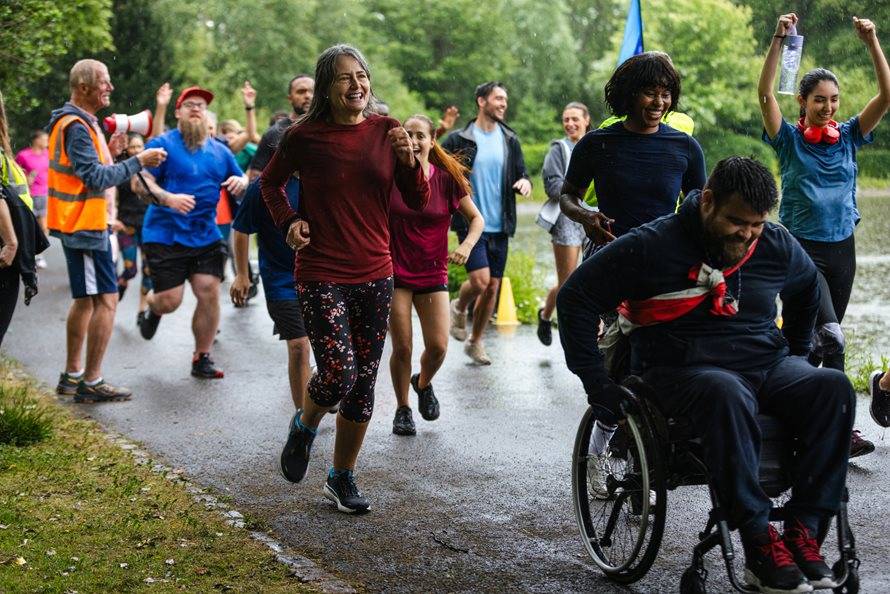
An example of this is the many standardised assessments for children with disability that assume spoken language. My son has not, and probably never will, complete one of these. I have seen too many children assessed and judged, often with life changing consequences, on tools that simply do not consider their individuality or their method of communication. This is why B-HART’s How to Claim Your Human Rights project has six partners, each representing a unique community and intersection. We designed it that way intentionally.
Does it make the project more complex? Yes.
Does it require more listening, coordination, and adaptation? Yes.
Will it make the outcomes more meaningful and create greater impact for people? Also yes.
I will take complexity any day if it means what we create has a real impact for people advancing their rights.
Christine Bigby also made a powerful point that has stayed with me. Quality services are safe, but safe services are not necessarily quality.
She pushed further. What does quality mean in a sector where expectations are too often set too low and standards are minimum thresholds? If we only aim for safety, we risk institutionalising mediocrity.
Quality should mean quality of life. Reaching individual goals. Realising rights in ways that are visible and tangible.
That is the challenge for all of us across leadership, governance, systems, and practice. Whether we are strengthening human rights capability, building better operational infrastructure, or delivering frontline supports, the question remains the same.
Are we creating the conditions for people to genuinely live the lives they choose?
It was a day of thoughtful discussion and an important reminder of why this work matters.
While there is tangible reporting through the Strategy’s Outcomes Framework, I would love to see these public forums focused specifically on reviewing that progress together. Real discussions about what has happened and what needs to change.
Progress is proven in practice.